

Why Your Gut Hates Your Sports Drink
You have trained hard, dialled in your pacing, and done the work. Then somewhere around the two-hour mark, your stomach turns. Most athletes blame fitness or nerves. More often than not, the problem is sitting right there in the drink bottle.
The ingredients in most conventional sports products are a more common cause of race-day GI distress than athletes realise. Here are the five biggest offenders, and what to look for instead.
1. Maltodextrin
Maltodextrin is the most common carbohydrate in sports nutrition. It is cheap, mixes easily, and is in almost every mainstream gel and drink on the market.
The issue is its glycaemic index, which sits between 85 and 105, higher than table sugar. It spikes blood glucose fast and, more importantly for athletes, it has a high osmolality. That means it draws fluid into your gut to process it. At rest, that is manageable. During hard exercise, when blood flow to your digestive system is already reduced, it becomes a recipe for bloating, cramping, and nausea.
Research suggests that up to 70% of endurance athletes experience GI complaints during competition. Carbohydrate type and concentration are consistently listed as primary contributing factors.
2. Stevia
Stevia is marketed as the natural, clean-label sweetener. Compared to artificial alternatives, it does have a better safety profile. But for athletes, it has two specific problems.
First, a meaningful number of people experience bloating and GI discomfort from stevia, particularly during exercise when the gut is already under stress. Second, stevia has a bitter aftertaste that becomes harder to tolerate as a race goes on. Taste aversion late in an event is one of the most common reasons athletes underfuel. A product that is tolerable at kilometre 10 but unpleasant at kilometre 35 is a problem.
3. Artificial sweeteners
Acesulfame potassium (Ace-K), sucralose, and aspartame are used widely because they are cheaper than stevia and provide intense sweetness with zero calories.
Emerging research has raised real questions about their impact on gut health. A 2022 study in the journal Cell showed that sucralose and saccharin caused measurable alterations to gut microbiota composition. Sucralose has also been associated with increased intestinal permeability in some studies, which is a concern for athletes already putting their gut under physical stress during long efforts.
4. Artificial colours
Vivid blues, electric oranges, neon greens. They look impressive on a shelf. They do nothing for performance.
Common artificial dyes like Tartrazine (Yellow 5), Allura Red (Red 40), and Brilliant Blue (Blue 1) can cause adverse reactions in individuals with food sensitivities or gut conditions. More broadly, their presence in a sports product signals something about the brand's formulation priorities. If a product needs to look exciting to sell, the ingredient list is probably doing the heavy lifting for marketing rather than performance.
5. Preservatives
Sodium benzoate and potassium sorbate are the most common preservatives in sports gels and drinks. In liquid formats, there is sometimes a case for them. In dry powder formats, there is almost never a reason for them to be there.
Potassium sorbate in particular is associated with GI irritation at higher doses. For athletes who are already managing a sensitive gut, unnecessary additives are worth eliminating.
What to look for instead
- HBCD as the carbohydrate source. Highly Branched Cyclic Dextrin has a low osmolality and fast gastric emptying rate, which means your gut processes it more easily under exercise load.
- Monk fruit as the sweetener. Naturally derived, no bitter aftertaste, and none of the gut microbiome concerns associated with artificial sweeteners.
- No artificial colours. There is no performance reason for them to be there.
- Meaningful sodium per serve. Look for at least 300 to 500mg per serve for sessions over 60 minutes, clearly disclosed on the label.
- A short ingredient list. Every ingredient should have a clear reason to be there. If you cannot work out why something is in the formula, it probably should not be.
GI distress during endurance sport is common. But it is not inevitable. The ingredient list on your sports nutrition product tells you most of what you need to know about whether your gut is going to cooperate on race day.
Pulse Endurance Fuel is built on HBCD, monk fruit, and a full electrolyte profile, with nothing that does not need to be there. Every ingredient disclosed. Every dose stated.
Shop Endurance Fuel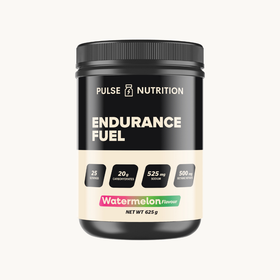
From the Pulse range
Fuel that holds up when it counts.
20g gut-friendly HBCD carbs and 525mg sodium per serve. Every ingredient and every dose on the label.
